
Repetitive tasks such as email marketing and social media posting can be…well, repetitive. Not only do they take up your valuable time, but staying on top of it all can be daunting. This is where marketing automation comes in. When done right, it can provide a more personalised service to your customers and let you focus on the more important stuff. But what is marketing automation and how do you use it?
Keen to learn more? Read on.
Overview:
- What is marketing automation?
- Examples of marketing automation
- What is marketing automation used for?
- What are the benefits of marketing automation?
- What do I need to nail my marketing automation?
- What is the best marketing automation tool?
- When is marketing automation not right for your business?
What is marketing automation?
Marketing automation involves the use of technology and software to automatically target past, present and future customers across multiple channels. It’s also one of the best solutions for personalising the customer journey.
From reminding customers about abandoned carts, to nurturing potential customers along the path to purchase, marketing automation allows you to make your business go further, with minimal effort.
4 examples of marketing automation
Before we get into the nitty gritty, it’s probably best if we show you exactly what marketing automation can look like. Marketing automation can take form as:
1. Birthday emails
We touched on this in our article on Digital Transformation in Retail, but Campaign Monitor recently revealed that birthday emails have a 481% higher transaction rate than promotional emails. Which makes sense, because who hasn’t scanned their inbox for birthday deals and spent the day collecting free coffees, scoring a discounted burrito or a special 10% off.
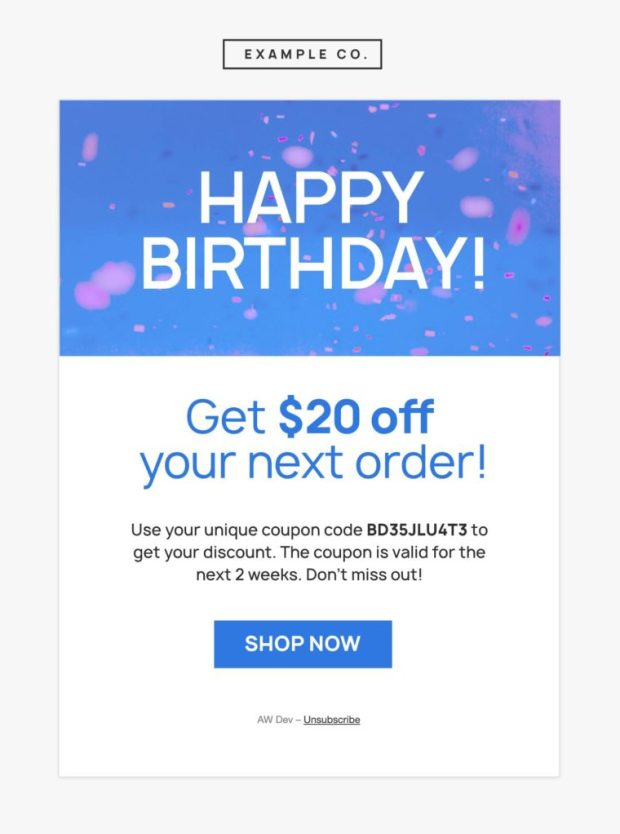
Birthday emails are personal and an easy way to keep customers loyal with minimal effort. So we think it’s safe to say that it’s worth adding to your digital strategy if you’re in the eCommerce space.
2. Win-back campaigns
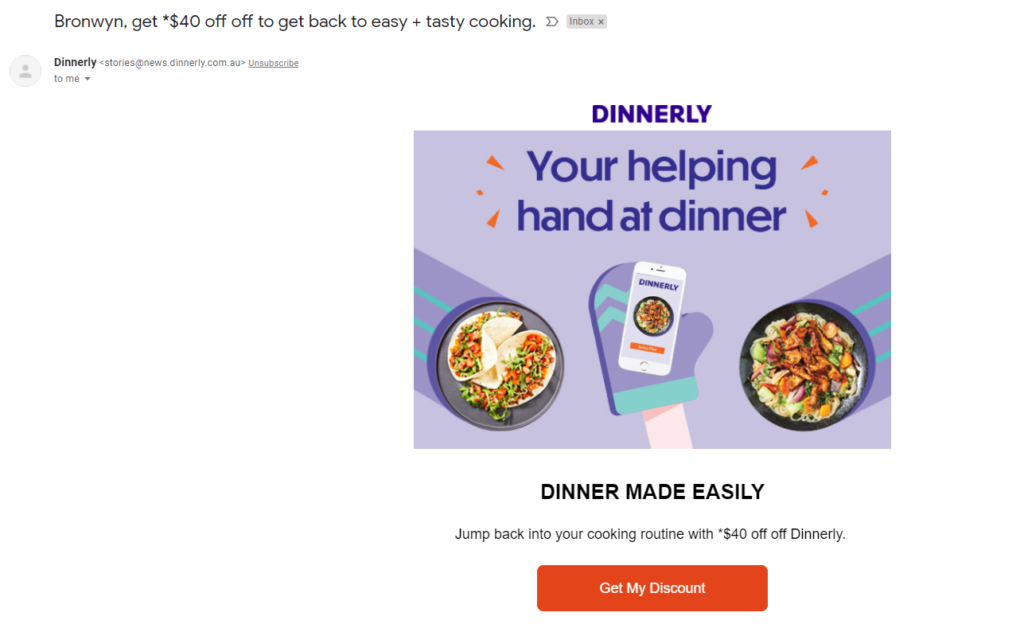
Not every customer is going to stay with you forever, but some might, with just a little nudge in the right direction. Marketing automation works well with ‘win-back’ programs. Say a customer has taken a little shopping hiatus. With the right system set up, you can offer them a small incentive to come back in-store and reignite their love of your brand.
3. Gated content marketing
Gated content is when valuable pieces of content, like how-to guides, templates or case studies are provided in exchange for key information such as email addresses, job title, postcode etc. You will consistently find these over the internet because they are a significantly valuable tool for lead generation.
By building your gated content correctly, you’re creating a reserve of qualified leads that you can further guide and nurture down the sales funnel. Once you’ve got their information, you can begin to pitch relevant services or products to them. Easy, right?
4. Abandoned cart reminders
Never tried setting up abandoned cart reminders before? You’re sitting on a nice little nest egg, my friend.
Essentially, these are reminders you send to your customer when they’ve almost made it to the shopping finish line, but for one reason or another they’ve not completed their purchase. You can simply remind them they’ve still got some shopping to do or incentivise them with a 10% coupon — or both! The best abandoned cart emails are:
- Personalised
- Straight to the point
- Well-branded
- Provide a clear call-to-action
According to Klaviyo, the average ecommerce abandoned cart email earns $5.81 in revenue per recipient — which is a hard motivator to ignore!
What is marketing automation used for?
Marketing automation can be used across multiple aspects of a business. However, it ultimately falls within:
- Lead nurturing: This is the process of using email automation to guide the customer down the marketing funnel to either buy a product or enquire about a service.
- Personalised email marketing: You want a brand to treat you like a person, and email personalisation does just that.
- Campaign management: Building email lists, customer segmentation, lead generation tactics and the circumstances that trigger automation.
- CRM integration: This allows businesses to transfer lead information between marketing and sales.
What are the benefits of marketing automation?
1. Take the strain off your team
When you’re first getting a grasp on what is marketing automation, your first stop should be looking for your teams’ most repetitive marketing tasks. This is where you’ll find the biggest gains from automation. As we mentioned above, simply automating response emails, for example, can substantially reduce the administrative burden on your team. Plot out all of your current marketing tasks, and pick out the ones that are both time-consuming and compatible with automation.
2. Boost your customer’s experience
While increased efficiency is a key benefit, the biggest opportunity that marketing automation presents is the ability to provide a better customer experience.
No one wants to be treated like just another cog in the wheel. Instead, serve them up a platter of content based on their browsing history or recommended products that they should try next.
3. It’s all automated!
By setting up email marketing automation, companies can tailor their email messaging to be sent automatically when a customer completes an action. For example, if a customer signs up to your email list, you can automatically send them a welcome email. When a customer abandons their online shopping cart, an automated email reminder can be sent to encourage the customer to complete the purchase.
They get instantaneity, and you get a customer!
What do I need to nail my marketing automation?
1. Understand your needs
One of the easiest ways to identify where automation is needed in your team is to see where there are repetitive tasks. Make the time to take stock of your team and where they’re spending their hours to see what might have potential
2. Determine your goals
There’s no point in investing in marketing automation if there is no clear purpose. Are you looking to decrease the work on your team? Increase revenue from your email marketing? Find new leads? Each of these goals will take you in a different direction so have a clear idea before you start your journey.
3. Find the right tools for your business
Your goals will help you determine which tools are right for you, as each tool will have its specialties. Just because a tool has been right for others, doesn’t mean it will suit your needs — so make sure you do your research before signing up for any expensive subscription.
4. Assign your workflow
For your automation process to be seamless, you’ll still need to map it out manually. This means writing the email sequences, designing the content, double-checking that everything is working correctly, assigning tasks within CRM lead-flows, and overseeing internal processes. When you’ve reviewed the workflow meticulously, you can have confidence in your automation!
What are the best automation tools?
Like we said above, you need to find an automation tool that works for you. We’ve listed some below to get you started:
When is marketing automation not right for your business?
- When it needs that human touch — sometimes it can be tempting to automate everything, but it’s important to take stock of what touchpoints require that extra special personalisation.
- Poor implementation — before adding basic personalisation to your emails, make sure everything is working correctly. If you’re not able to correctly implement these elements with confidence, it might be best to park it for now. Automation done wrong is worse than no automation at all.
- If you don’t have tools that speak to each other, you may want to hold out until you are able to invest in those that do. Automation is amazing once it’s up and running, but it’s a lot of work to get it going efficiently. If you’re not equipped with the right tools you may see a lot of hard work go down the drain.
If you’re looking to boost your income without overloading yourself or your team then a complete marketing automation overhaul could be the right answer for you. If you’re still scratching your head and wondering what is marketing automation and how it can help, get in touch with Kwasi. We’re more than happy to get your automation and other digital marketing elements up to scratch!
