
Marketers know how vital a well-optimised web presence is, but did you realise that PDFs can also boost your search engine rankings? PDFs are often overlooked in SEO strategies, leading to missed opportunities for improving visibility and user engagement. This guide will help you understand how to optimise your PDFs effectively, ensuring they contribute to a neat and professional SERP appearance.
By following a few simple steps, you can enhance your PDF files just like you would with any HTML document. From picking the right software to tweaking metadata, we’ll walk you through making your PDFs more SEO-friendly. Read on as we dive into how you can make every aspect of your online content work harder towards your marketing goals.
 Take this for example, Google: ikea kitchen filetype:pdf and you will see:
As you can see the title is minimalist (by accident) and the description doesn’t really sell the kitchen planning guide. It’s still better than a lot of the PDF results in the SERPs that contain no text early on and instead display encoded text (gibberish to the layman) or files that have been created in Adobe InDesign & the defaults are in place – more on that later – time to find out how to optimise these little suckers!
Take this for example, Google: ikea kitchen filetype:pdf and you will see:
As you can see the title is minimalist (by accident) and the description doesn’t really sell the kitchen planning guide. It’s still better than a lot of the PDF results in the SERPs that contain no text early on and instead display encoded text (gibberish to the layman) or files that have been created in Adobe InDesign & the defaults are in place – more on that later – time to find out how to optimise these little suckers!
Steps to ranking PDFs
- Find the right software (eg. Adobe Acrobat)
- Open document properties
- Edit the title (same as title tag)
- Edit the subject (same as meta description)
- Optimise the file name
- Bonus – add authorship
 Take this for example, Google: ikea kitchen filetype:pdf and you will see:
- Title – dream kitchen
- URL – www.ikea.com/au/en/pdf/Kitchen%20Planning%20Guide%20V4.pdf
- Description – Take your time to explore our kitchen range. Visit the IKEA store and stroll around our kitchen department (don’t forget to pick up a copy of the IKEA Kitchen …
 As you can see the title is minimalist (by accident) and the description doesn’t really sell the kitchen planning guide. It’s still better than a lot of the PDF results in the SERPs that contain no text early on and instead display encoded text (gibberish to the layman) or files that have been created in Adobe InDesign & the defaults are in place – more on that later – time to find out how to optimise these little suckers!
Simple Steps to Rank Your PDF
1. Find the Right Software
Choose the right software for your PDF. For basic rich text editing you can use Adobe Acrobat but you have to pay for it. There are some free alternatives out there such as Open Office (where you can “Save as PDF”) or if you love Bill Gates, get the Microsoft Office PDF plugin. For higher end super-sexy PDFs you can use InDesign, Photoshop or even Quark. Whichever software you choose, it’s important to keep following the next steps either pre compiling the document or once it’s already been generated.
2. Open the Document Properties
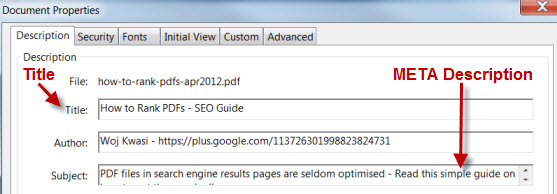
Find the document properties – this is where the META data is entered and contains the important bit of information that search engine crawlers are looking for to help them piece together the semantic nature of the PDF. For example, in Adobe Acrobat go to “File” > “Properties” or hit Ctrl-D.
3. Edit the Title
This is essentially the same as the title tag in HTML documents. Limit this to around 66 characters (after that it gets truncated & you get “…”)
4. Edit the Subject
This is essentially the same as the META description tag in HTML documents. Limit this to around 150-160 characters (similarly to titles, it gets truncated & you get “…”)
5. Optimise File Names
- Try to avoid using company defaults if possible (e.g. don’t use A786554-Document.pdf – that may be good for organising your Intranet but not great for the world wide web)
- Name files as you would URLs, i.e. include relevant keywords, lower case & replace spaces with dashes.
6. Bonus – Add Authorship
Add your name, the author’s name or company’s name in the “Author” field.
Optimising your PDFs is a straightforward yet powerful way to improve your search engine rankings and enhance the overall presentation of your content. By paying attention to details like document properties, file names, and authorship, you can ensure your PDFs stand out in SERPs and provide valuable information to users in a well-organised manner. This not only helps in drawing more traffic but also in maintaining a professional and polished online presence.
Don’t let your PDFs become the weak link in your digital marketing efforts. Implement these optimisation tips today, and see how even the simplest documents can make a big difference in your search visibility.

Comments (0)